Which is Better Value? Edifier S880Db Mkii Speakers vs Rotel Dx 5 Compared
Choosing between an all-in-one active speaker solution and a component-focused preamplifier/DAC is a common crossroads for audio buyers. The Edifier S880Db MkII and the Rotel DX-5 occupy different positions in the ecosystem: one promises simplicity and convenience, the other offers flexibility and a path to higher-end separates. This article compares them on the criteria that matter most to real buyers — sound quality, connectivity, convenience, room suitability, upgradeability and long-term value — and offers a practical buying guide to help decide which represents the better value for different use cases.
Introduction: Two different approaches to sound
At a glance, the comparison is less about which product is “better” in absolute terms and more about which approach matches a buyer’s needs. The Edifier S880Db MkII is an active speaker system that puts amplification, digital conversion and convenience into the speaker enclosure. It aims to simplify setup and deliver strong performance without a separate amplifier. The Rotel DX-5, by contrast, is a digital preamplifier / DAC / streamer component designed to sit in a traditional separates system — used with a power amplifier and passive speakers — and to provide higher-end digital processing and flexible digital inputs.
Buyers typically weigh several practical concerns: how they listen (nearfield desktop vs. full-room stereo), what sources they use (streaming, vinyl, TV), whether they plan to upgrade later, and how much complexity they want to manage. The rest of this article examines how each product addresses those concerns and where each one shines.
Detailed product analysis
Edifier S880Db MkII — convenience-focused active speakers
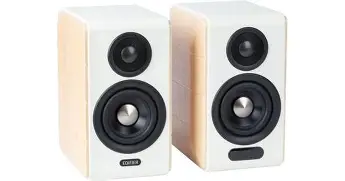
The Edifier S880Db MkII represents the active-speaker model: drivers, crossovers, amplifiers and digital inputs built into two cabinets ready to connect to sources. This approach prioritizes ease of use and small-system performance.
Strengths in real-world use:
- Simple setup: For users who want a minimal system, the S880Db MkII requires only source connection and placement. There is no separate amplifier, speaker cable routing or matching to worry about.
- Ideal for apartments, desks and small living rooms: Active speakers are often optimized for modest spaces and nearfield listening; they perform particularly well at desktop distance or in smaller rooms where room gain and low-frequency demands are limited.
- Integrated digital connectivity: With on-board digital inputs and wireless streaming options, they handle streaming from phones and computers without needing an external DAC or streamer.
- Remote and onboard controls: Users can tweak volume, input and basic tone quickly, which is convenient for daily use and TV/desktop setups.
Considerations and trade-offs:
- Upgrade path is limited: While active speakers can be used as finished systems for years, buyers who want to swap amplifiers or gradually improve the chain will find fewer options than in a separates setup.
- Room-limited low-end: Built-in amplification and cabinet size often mean bass extension and headroom are limited compared with a dedicated powered subwoofer or a larger passive-speaker system driven by a robust amplifier.
- Sound signature and voicing: The speaker’s built-in DSP and voicing are fixed; some listeners may prefer the ability to change amplification or use external crossovers.
Rotel DX-5 — component approach for flexibility
The Rotel DX-5 represents a different philosophy: it is a source-centric component intended to sit between transport devices and a power amplifier (or integrated amplifier). It focuses on digital conversion, multiple inputs and refined preamplifier control.
Strengths in real-world use:
Find top-rated Audio & Headphones products at great prices.
See Deals →- Flexible system building: The DX-5 can be a long-lived central piece in a separates system. It can accept multiple digital sources (network streamer, TV optical/coaxial, computer) and feed a dedicated power amplifier or integrated amplifier, making future upgrades straightforward.
- Higher fidelity from digital sources: As a dedicated DAC/preamplifier, it is designed to extract more detail and deliver cleaner digital-to-analog conversion than many built-in speaker DACs.
- Control and routing: It offers more comprehensive input switching and preamplifier-level control, which is useful in multi-source systems or when integrating with home theater and multi-room setups.
- Upgrade potential: Because the DX-5 feeds an amplifier rather than containing one, upgrading the amplification or speakers later is straightforward and can produce larger gains in performance.
Considerations and trade-offs:
- Requires more components: Buyers must pair the DX-5 with a power amplifier and passive speakers, increasing cost and complexity compared with an active speaker solution.
- Less plug-and-play: Setup and cable management demand more time and knowledge — matching sensitivities, gain structure and speaker wiring are necessary.
- Space and furniture footprint: A separate component typically occupies rack space or a shelf and may add to the clutter in smaller living spaces.
Pros & Cons — quick reference
Edifier S880Db MkII
- Pros: Easy to set up; integrated amplification and digital inputs; compact footprint; good performance for small to medium rooms; convenient controls and remote.
- Cons: Limited upgrade path; less room-filling bass potential without a subwoofer; voicing fixed by the manufacturer.
Rotel DX-5
- Pros: High-quality digital processing; flexible system integration; excellent upgrade path; better matched to serious hi-fi setups and multi-source systems.
- Cons: Requires additional components (amplifier, passive speakers); greater initial complexity; larger footprint and higher total system cost if starting from scratch.
Comparison table
| Feature | Edifier S880Db MkII | Rotel DX-5 |
|---|---|---|
| Product type | Active powered bookshelf speaker system | Digital preamplifier/DAC/streamer (component) |
| Target user | Casual listeners, small-room users, desktop setups, TV/streaming convenience seekers | Component-system builders, audiophiles, users with multiple digital sources |
| Built-in amplification | Yes — amplification integrated into the speaker(s) | No — designed to feed a separate power amp or integrated amp |
| Connectivity | Combination of digital inputs and wireless streaming options suitable for phones and PCs | Multiple digital inputs and outputs, optimized for high-quality source switching and DAC performance |
| Ease of setup | High — plug in sources, place speakers, adjust volume | Moderate to low — requires pairing with external amplifier and speakers |
| Upgrade path | Limited — replacement typically means changing the entire speaker | Strong — swap amps, speakers, or add components over time |
| Room suitability | Best for small to medium rooms; can be paired with a subwoofer for larger rooms | Scales better to medium and large rooms when paired with appropriate amplifiers and speakers |
| Best real-world uses | Desktop audio, small living-room stereo, TV sound improvement, casual streaming | Dedicated stereo systems, critical listening, integration with larger home audio systems |
How they sound in practice
Sound perception is subjective and room-dependent, but some broad observations apply based on the architectures of each option. The Edifier active speakers are voiced to deliver a satisfying, immediate presentation with good midrange clarity and a crisp top end — attributes that translate well to vocals, podcasts, and casual music listening. The integrated amplification is tuned to the drivers and cabinet, which helps in everyday settings where convenience matters.
In a component system using the Rotel DX-5, much of the sonic character will come from the downstream amplifier and speakers. The DX-5’s role is to provide clean, low-noise digital conversion and precise preamplifier control, which can reveal greater microdetail and a more open soundstage when paired with capable amplification and speakers. For listeners who prioritize resolution and plan to iterate on components over time, a DX-5-centered system typically yields higher ultimate performance.
Real-world use cases and buyer concerns
Several typical buyer profiles help illustrate which product is the better value for particular needs.
1. The convenience-first renter or desktop user
For someone in a small apartment, a dorm room or a home office who wants a tidy setup to stream music and watch TV, the Edifier system usually wins. It minimizes boxes, cables and compatibility headaches. The ability to stream Bluetooth, plug in a laptop or TV and get pleasant sound quickly is highly valuable for this buyer.
2. The multi-room / multi-source household
If the priority is integrating multiple digital sources (NAS, TV, streamer, computer) into a single hub that can route reliably to different zones or to a full-size stereo, the Rotel DX-5 is better suited. Its switching and DAC capability simplify integration with other components and allow the core of the system to age gracefully.
3. The aspiring audiophile
A buyer who expects to upgrade amplifiers and speakers over time will find the component route delivers better long-term value. Spending on a quality digital preamp/DAC now preserves the option to improve amplification and speakers later without replacing the source brain.
Shop the latest Audio & Headphones picks on Amazon.
Browse Now →4. The budget-conscious beginner
When the budget is tight and the buyer prioritizes immediate performance-per-dollar without the need to learn system matching, powered speakers are often the more economical path. It reduces the number of purchases and lowers the risk of mismatched components.
Buying guide: what to consider before choosing
Follow this checklist to align a purchase with real needs rather than marketing claims.
- Listening environment: Measure or estimate room size. Small rooms favor powered bookshelf speakers; larger rooms often benefit from separates with more powerful amplification and larger passive speakers.
- Upgrade path: Decide whether the system should be final (a single purchase to keep) or the start of an upgrade journey. If the latter, prioritize components like a good DAC/preamplifier that will last through future amplifier and speaker changes.
- Primary sources: List the main sources (phone, TV, turntable, streamer). If most use is Bluetooth/streaming, a powered speaker with integrated wireless is convenient. For multiple wired digital sources or ambition to use high-resolution files, a dedicated DAC/preamp is more flexible.
- Space and aesthetics: Consider furniture, speaker placement and cable running. Active speakers remove the need for a separate amp but still require speaker stands and space. Components need a shelf or rack and more cabling.
- Budgeting holistically: Compare total-system cost. A DAC/preamp plus amplifier and passive speakers can quickly exceed the price of a pair of powered speakers, though it may deliver higher performance per dollar in the long run.
- Subwoofer strategy: If room gain or low-frequency extension is important, plan for a subwoofer. Powered speakers can often connect directly to a sub, and a preamplifier can send a dedicated sub output. Either product can be part of a hybrid setup.
- Technical comfort: If the buyer prefers minimal setup and troubleshooting, powered speakers reduce complexity. Those comfortable with matching components will have more options with a preamplifier approach.
Practical recommendations
For readers deciding between these two approaches, here are pragmatic recommendations framed by common goals:
- Buy Edifier S880Db MkII if: simplicity and convenience are priorities, the listening room is small to medium, the user wants an all-in-one setup for streaming and TV without investing in separates, or the buyer needs a good-sounding desktop/study system with minimal fuss.
- Buy Rotel DX-5 if: the buyer already owns or plans to acquire a high-quality power amplifier and passive speakers, wants superior digital source handling and switching, or intends to upgrade the system component-by-component for long-term performance gains.
Conclusion
Value is contextual. The Edifier S880Db MkII delivers clear, practical value for listeners who want a compact, easy-to-use, all-in-one stereo solution that sounds good in small to medium rooms and daily use. The Rotel DX-5 offers better value to users invested in a separates-based system who prize digital performance, flexibility and the option to upgrade amplification and speakers later.
For a buyer seeking immediate simplicity and good sound without building a system from scratch, the Edifier route is likely the better value. For a listener planning a long-term component system where the source and preamplifier remain central through multiple upgrades, the Rotel approach delivers more long-term value. The right choice depends on room size, upgrade intentions, technical comfort and how the system will be used day-to-day.