Pixpro Az528 Honest Review — Is the Hype Justified?
My Journey with the Bridge Camera: Why I Picked the Az528
I’ve spent the better part of the last decade carrying around a heavy DSLR bag, swapping lenses in the wind, and wondering if there was a better way to capture wildlife and distant landscapes without the backache. A few months ago, I started seeing the Kodak Pixpro Az528 popping up in photography forums and social media groups. The "Astro Zoom" line has always had a bit of a cult following, but the Az528 specifically seemed to be hitting a sweet spot for people who wanted massive reach without the four-figure price tag of a professional telephoto setup. I decided to put my money where my curiosity was and bought one to see if a bridge camera with a 52x optical zoom could actually deliver on its promises. After four months of hiking, birdwatching, and even a few clear nights of lunar photography, I’m ready to share my honest experience.
When I first unboxed the Az528, I was struck by how it felt in the hand. It has that classic DSLR silhouette, which I personally prefer because it provides a substantial grip for my right hand. However, the weight difference was immediately apparent. It’s light—perhaps a bit "plasticky" for those used to magnesium alloy bodies—but for someone like me who plans to trek five miles into a nature preserve, that lightness is a feature, not a bug. I wanted to see if this could become my go-to "walking around" camera, the one I grab when I don’t want to think about gear, but I still want to be able to see the whiskers on a squirrel at fifty paces.
Specifications and First Impressions
Before diving into the performance, it’s worth noting what we are working with here. The Az528 features a 16-megapixel CMOS sensor and, the star of the show, a 24-1248mm equivalent lens. That kind of range on a traditional camera would require a lens the size of a bazooka. What I found in my first week was that the versatility is addictive. I could take a wide-angle shot of a valley and, within seconds, zoom in to see a specific cabin on a distant ridge. The electronic viewfinder (EVF) was a bit of a point of contention for me initially. It isn't the highest resolution out there, but in the bright midday sun where the rear LCD becomes hard to see, I found myself relying on it heavily. It’s functional, if not luxurious.
One thing that bothered me right out of the gate was the battery door. It felt a little flimsy compared to the rest of the body. I’ve been using this for several months now, and it hasn't broken, but it’s one of those small design details that reminds you this is a mid-range bridge camera. On the flip side, the layout of the buttons is incredibly intuitive. I didn't have to dive deep into the menus to change my exposure compensation or toggle the macro mode. As someone who likes to react quickly to lighting changes, I appreciated that the physical interface didn't get in my way.
The Zoom Factor: Reality vs. Marketing
We have to talk about the 52x zoom because that is the primary reason anyone considers this camera. In my experience, there is a distinct "sweet spot" for the Az528. Between the wide 24mm end and about 30x or 40x zoom, the image quality is surprisingly crisp for a sensor of this size. I was surprised by how much detail the lens could resolve in good lighting. I took some shots of a blue heron from across a wide pond, and I could clearly see the texture of its feathers. However, once you push it to the full 52x magnification, you start to see the limitations of physics. The image softens slightly, and you really need a steady hand or, ideally, a tripod.
The Optical Image Stabilization (OIS) does a decent job, but it’s not magic. After testing for several weeks, I noticed that when I was fully zoomed in, even the vibration of my own heartbeat could cause the frame to dance around. I found that if I tucked my elbows into my ribs and held my breath, I could get sharp shots at full zoom, but it takes practice. If you are expecting every shot at 1248mm to be tack-sharp while you're running or moving, you might be disappointed. But if you're patient, the reach is genuinely transformative for your photography. It opens up subjects that are simply impossible to capture with a smartphone or a standard kit lens.
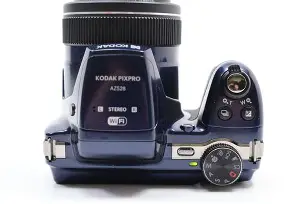
Image Quality and Sensor Performance
The 16MP CMOS sensor is a solid performer in daylight. I found the color science to be quite pleasing; the reds and greens have a punchy, natural look that didn't require much post-processing. What I found was that the camera handles highlights quite well, though it can struggle in high-contrast situations where you have very bright skies and dark shadows. I started using the HDR mode for my landscape shots, and I noticed that it does a fair job of balancing the exposure, though it can look a bit "processed" if you aren't careful.
In low light, the story changes. This is where honesty is required. Because it uses a 1/2.3-inch sensor—the same size found in many older point-and-shoots—it isn't a low-light monster. As I pushed the ISO above 800, I noticed a significant amount of grain and "muddiness" in the shadows. I tried taking some evening street photography shots, and while they were usable for social media, they lacked the clinical clarity of a larger sensor. If you are a nighttime photographer, the Az528 might not be your primary tool. But for daytime sports, birding, and travel, it holds its own remarkably well.
Discover deals on Electronics — updated daily.
Shop Amazon →Day-to-Day Use: The Little Things I Noticed
I’ve been using this for four months as my primary "hiking buddy," and there are a few quirks I think a potential owner should know. First, the autofocus. In bright light, it’s snappy and reliable. It locks onto subjects quickly. However, when the light starts to fade or if you are trying to focus on a small bird tucked behind some branches, the camera can "hunt" a bit. I found that I had to occasionally pull back the zoom, lock focus on something easier, and then zoom back in to help the camera out. It’s a technique I developed after a few frustrated attempts at catching a woodpecker in motion.
Another thing I appreciated was the macro mode. I wasn't expecting much, but I found that I could get incredibly close to flowers and insects. The "1cm Macro" isn't a gimmick; it actually works. I spent a whole afternoon in my garden just taking photos of bees and flower petals, and the level of detail was stunning. It adds another layer of versatility to an already flexible camera.
Pros and Cons of the Pixpro Az528
- Impressive Optical Reach: The 52x zoom is the clear winner here. Being able to go from a wide landscape to a tight shot of the moon or a distant animal without changing a lens is a total game changer for casual enthusiasts.
- Intuitive Physical Controls: I love that Kodak didn't bury everything in a touch menu. Having physical buttons for the most used functions makes the shooting experience feel much more "professional" and tactile.
- Portability and Comfort: For a camera with this much power, it’s incredibly light. I can hang it around my neck for a three-hour hike without feeling the strain that my DSLR used to give me.
- Decent Battery Life: In my experience, I could get through a full day of shooting—roughly 250 to 300 shots—on a single charge, provided I wasn't constantly using the built-in Wi-Fi to transfer photos.
- Built-in Wi-Fi: Speaking of Wi-Fi, the connection to the smartphone app was surprisingly stable. I enjoyed being able to beam a photo to my phone to share with friends while I was still out on the trail.
- Low Light Limitations: The small sensor means that ISO performance is a weak point. Once the sun goes down, you’ll need a tripod and a lot of patience to get clean images.
- Electronic Viewfinder Quality: While I’m glad it has an EVF, the resolution is fairly low. It looks a bit pixelated, which can make fine manual focusing a bit of a challenge.
- Slow Buffer Speeds: If you take a long burst of photos, you’ll have to wait a few seconds for the camera to write them to the SD card before you can take another shot. It’s not ideal for high-speed action sports.
Comparison with Competitors
When I was shopping around, I looked at a few other bridge cameras. It's important to see how the Az528 sits in the current landscape of fixed-lens cameras. Here is how I’ve categorized the differences based on my research and hands-on comparisons at the local shop.
| Feature | Kodak Pixpro Az528 | Typical Entry-Level Bridge | High-End "Superzoom" |
|---|---|---|---|
| Optical Zoom | 52x (24-1248mm) | 20x - 40x | 60x - 125x |
| Sensor Type | 16MP CMOS | 16MP CCD or CMOS | 20MP BSI-CMOS |
| Video Capability | 1080p Full HD | 720p or 1080p | 4K Ultra HD |
| Weight | Approx. 500g | Approx. 400g | Approx. 900g+ |
| Price Point | Mid-Range / Budget | Entry Level | Premium / Professional |
Buying Guide: Is the Az528 Right for You?
Buying a camera is a personal decision, and after using the Az528, I think it fills a very specific niche. If you are trying to decide if this is your next purchase, consider these factors that I encountered during my time with the unit. First, think about your primary subjects. If you are mostly shooting your kids' indoor basketball games or low-light theater performances, you might find the noise levels frustrating. However, if you are a traveler, a backyard bird enthusiast, or someone who loves capturing the moon, the "Astro Zoom" branding is more than just a name—it genuinely excels at those tasks.
Another thing to consider is your level of technical interest. One thing I noticed is that this camera is great for "beginners who want to grow." It has a full Manual (M) mode, as well as Aperture Priority (A) and Shutter Priority (S). I spent several weeks just playing with Shutter Priority to see how I could freeze the motion of running water. It’s a great "teacher" camera because it gives you those professional controls without the overwhelming complexity of a high-end cine-camera. If you just want to stay in "Auto," it does a fine job, but the camera really starts to shine when you take control of it.
You should also factor in the cost of accessories. I found that I absolutely needed a fast SD card (Class 10 or better) to help with those buffer speeds I mentioned. I also ended up buying a small camera bag with a shoulder strap. Because the lens extends quite a bit when fully zoomed, you want to make sure you have a case that protects that glass. Lastly, consider a basic tripod. If you want to use that 52x zoom to its full potential, a $20 or $30 tripod will be the best investment you can make alongside the camera itself.
Advanced Features: Exploring the Menus
After the first month of "basic" shooting, I started digging into the more advanced features. One thing I found was the "Object Tracking" mode. I used this while trying to photograph my dog running in the park. While it isn't as advanced as the "eye-tracking" systems on $2,000 mirrorless cameras, it did a surprisingly good job of keeping the focus box on a moving target. It’s quite useful for sports or active pets, provided they are moving at a predictable speed.
Find top-rated Electronics products at great prices.
See Deals →I also spent some time with the scene modes. Usually, I ignore these, but the "Pet Mode" and "Sunset" modes actually have some smart logic behind them. The "Sunset" mode, in particular, did a great job of warming up the colors without blowing out the highlights of the sinking sun. I was surprised by the "Panorama" mode as well. You just pan the camera across the horizon, and it stitches the image internally. I found it worked best if I kept my movements very slow and steady; otherwise, you can get some weird "ghosting" effects where the images meet.
Video Performance: A Secondary Perk
While I primarily bought the Az528 for stills, I did test the video capabilities. It shoots in 1080p, which is fine for home movies and YouTube. What I found was that the zoom works while you are recording, but the motor noise is slightly audible on the internal microphone. If you are filming a quiet nature scene and you zoom in, you’ll likely hear a faint whirring in your footage. I solved this by using the "Wind Cut" feature in the settings, which helped muffle some of the ambient noise, but it’s something to be aware of. The stabilization in video mode is surprisingly decent—it smooths out the "shaky cam" look of walking and filming, making your vacation videos look a lot more professional than they would on a standard phone zoom.
The Verdict: Is the Hype Justified?
After four months of nearly daily use, I have a very clear picture of what the Kodak Pixpro Az528 is—and what it isn't. Is it a professional-grade camera that will replace a $5,000 wildlife rig? No, and it doesn't claim to be. The "hype" around this camera usually centers on its affordability and its massive zoom. In that regard, the hype is absolutely justified. I’ve been able to take photos of the Saturn-like rings of the moon and the distinct markings on a hawk’s wings from 100 feet away, all with a camera that fits in a small backpack and doesn't require a second mortgage.
What I found was that the Az528 is a "specialist in versatility." It’s the perfect companion for someone who is curious about the world and wants to see it a little closer. It has its frustrations—the low-light noise, the slow writing speeds, and the plastic battery door—but these are small trade-offs for the sheer fun of having a 1248mm lens at your fingertips. Every time I take it out, I find myself looking at things I used to ignore, wondering "I wonder what that looks like up close?" and then being able to actually see it. For the hobbyist, the traveler, or the nature lover, it’s a solid piece of gear that delivers a lot of smiles per gallon. In my experience, if you understand its limits and play to its strengths, you’ll find it to be one of the most enjoyable cameras you’ve ever owned.
Ultimately, I’ve decided to keep the Az528 in my kit even though I still have my "pro" gear. There are just some days when I want to go for a walk, see some birds, and not worry about lens caps and heavy bags. It has earned its place as my "everyday observer," and for the price point it occupies, I think it’s one of the best bangs for your buck in the current electronics market. It reminds me why I got into photography in the first place: the simple joy of seeing something beautiful and being able to bring it home with me.