Hollyland Lark M2S Review: Real User Experience After 3 Months
Introduction
As someone who creates video content both professionally and for fun, I’ve always believed that great audio is just as important as great visuals. Over the years, I’ve tried shotgun mics, clip-on lavs, and compact wireless systems from various brands — and the struggle to find the perfect portable solution has always been real. Three months ago, I took the plunge and purchased the Hollyland Lark M2S wireless microphone system. I had seen a few reviews online that piqued my interest, and, honestly, the price point didn’t hurt either.
What follows is my genuine, hands-on experience after over 12 weeks of using the Lark M2S for vlogs, interviews, YouTube recordings, and even a couple of wedding shoots. I’ll dive into what I liked, what annoyed me, and I’ll give you an honest, unfiltered perspective for anyone considering this compact wireless mic system.
My Setup and Expectations
Why did I pick the Hollyland Lark M2S? Simply put, I wanted something truly pocketable, easy enough for solo shoots, and compatible with my mirrorless camera, iPhone, and occasionally my Android tablet. My prior wireless experience was a Rode GO (the first gen), which served me well but was a tad bulky and not the most reliable for run-and-gun situations. My hope was the Lark M2S would combine newer features with true reliability, all in a much smaller form factor.
First Impressions and Build Quality
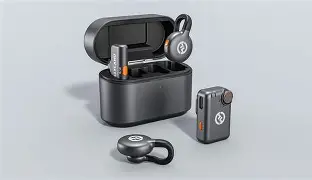
Out of the box, the Lark M2S made an immediate impression. The charging case is reminiscent of a modern TWS earbud case — sleek, matte, and pocket-sized. I appreciated that everything (2 transmitters, 1 receiver, all cables, and windshields) fit neatly in the case, making it genuinely grab-and-go. There’s a distinct minimalist vibe, but none of it felt cheap or flimsy.
The transmitters and receiver are feather-light and pleasantly compact. The clips feel strong, and the built-in magnets are much more useful in real life than I initially expected. Hollyland includes a generous spread of accessories: both TRS and TRRS cables, USB-C to USB-C, a Lightning adapter, and really solid magnetic windshields. As a detail, the labeling on the transmitters and receiver is clear — something I noticed is often neglected in compact audio kits.
Features and Performance in Real Use
Let’s get practical. Over the past three months, I’ve put the Lark M2S through weekday street interviews, windy outdoor shoots, and indoor voiceovers, all paired with my Sony a6400, an iPhone, and a Samsung tablet. Here’s where it earned its keep — and where it didn’t.
Ease of Use
The pairing process is refreshingly fast. Even after being tucked away for days, everything connects automatically upon opening the charging case and turning on my gear. I rarely had to fiddle with settings or “reset” the system. The “plug-and-play” description isn’t marketing fluff here — in my experience, it’s real.
Shop the latest Cameras & Photography picks on Amazon.
See Deals →The buttons are easy to access, and switching between “mono” and “stereo” is quick, though you’ll need to pay attention to which cable and device you’re using. The LCD display on the receiver is tiny but very legible. Battery life onscreen is a godsend for field users.
Audio Quality
Here’s where I was honestly surprised. The clarity is, in a word, impressive for this class and price. Voice comes through cleanly, and the built-in noise reduction is actually effective, especially considering this isn’t a high-end pro kit. With the foam or furry windshields attached, I recorded usable audio outdoors on a windy bridge and didn’t need to do much cleanup in post.
If you’re on an iPhone, expect a slightly hotter output than on a camera or Android — I had to dial down input gain on mobile. There was a subtle “hiss” when using the Lark M2S indoors with an air conditioner running in the background, but this was on par with most wireless lavs I’ve tested.
Range and Reliability
Hollyland claims a line-of-sight range of up to 200 meters (650+ feet), and while I never went that far, I confidently got about 90-100 meters (300+ feet) with no dropouts in open spaces. Indoors, with walls between me and the receiver, I only ran into issues around 30-40 meters, which was still impressive.
Over the 3 months, I only had one random disconnect — and that was after an entire day’s outdoor shoot, possibly because both the transmitter and receiver batteries were running low. Reconnection was nearly instant after putting them back in the charging case.
Battery Life
This is one of my favorite things about the Lark M2S. Realistically, I averaged about 6 hours of use per charge per transmitter, and the charging case gave me a full extra recharge in the field (I measured 2 complete charges in my first two weeks). The receiver drains faster when monitoring audio on a camera, but it never died on me during a shoot.
Compatibility and Accessories
The system is compatible with nearly everything: cameras, smartphones, tablets, and computers. No driver installs, just swap cables and, in some cases, attach an adapter. I especially liked the included Lightning connector and the little pouch — it’s clear Hollyland was thinking about creators constantly changing kits.
Find top-rated Cameras & Photography products at great prices.
See Deals →The magnetic windshields are outstanding. They stay put (huge relief in windy shoots!) and don’t easily pop off like some rival systems. The case, though, is a little prone to smudges and fine scratches; after three months mine’s looking a bit beat up, but nothing that affects use.
Pros & Cons: My Honest Findings
Pros
- Extremely portable and pocketable — truly “throw in a bag” size
- Excellent battery life and practical charging case
- Sound quality punches above its weight, especially with wind reduction
- Super-fast pairing and connection, no troubleshooting headaches
- Wide compatibility out of the box (Sony, Canon, iPhone, Android, PC, etc.)
- Magnetic windshields stay secure, even in strong winds
- Cable and accessory kit is generous — you won’t need to buy anything extra
- Clear display, intuitive controls
Cons
- Case finish is not very durable — picks up scratches/scuffs easily
- Occasional hiss indoors (not uncommon, but there nonetheless)
- No gain control on the transmitter — you need to adjust input level on your device
- Receiver is a bit wide — may block camera flip screens depending on hot-shoe location
- No app or firmware update mechanism (yet) — you get what ships in the box
Comparison: Hollyland Lark M2S vs. Alternatives
| Feature | Hollyland Lark M2S | Rode Wireless GO II | DJI Mic (Single) |
|---|---|---|---|
| Transmitters | 2 included | 2 included | 1 included |
| Receiver Size | Ultra-compact | Medium | Compact |
| Charging Case | Yes (USB-C) | No | Yes |
| Cable Bundle | TRS, TRRS, USB-C, Lightning | TRS, USB-C | TRS, USB-C, Lightning adapter |
| Battery Life (TX) | 6 hours (real-world, per TX) | up to 7 hours | 5.5 hours |
| Onboard Recording | No | Yes | Yes |
| App Support | No | Yes (limited) | Yes |
| MSRP (as tested) | Lower | Higher | Highest |
Who Should Consider the Hollyland Lark M2S? Buying Guide
After using this system extensively, here’s who I think will appreciate the Lark M2S the most:
- Solo video creators & vloggers who need quick setup, zero fuss, and absolute portability
- Event and wedding shooters — especially those who need a backup or second system on a budget
- Interviews in dynamic or changing environments, where quickly swapping from camera to phone is required
- Beginner content creators (YouTubers, TikTokers, teachers) who don’t want to tangle with complicated audio gear
- Frequent travelers and location shooters thanks to the genuinely compact, lightweight case
However, if you absolutely require onboard recording or the ability to tweak gain on the transmitter, or if you want robust app-based settings, you may want to consider the Rode Wireless GO II or the DJI Mic. Both are larger and pricier, but offer those extra features. For run-and-gun work where simplicity is key, I honestly think the Lark M2S stands out.
Conclusion
After three months, the Hollyland Lark M2S hasn’t just met my expectations — in most ways, it’s outperformed them. What started as an inexpensive experiment has become my daily driver for fast shoots, and something I trust enough to use commercially. While there are compromises — mainly the lack of onboard recording and occasional hiss — the balance of compact size, rock-solid connection, sound quality, and price makes it a standout option in the increasingly crowded wireless audio market.
If you’re a creator looking for a small, reliable, and affordable wireless mic system, in my experience, the Lark M2S is absolutely worthy of consideration. After three months, it’s earned a permanent place in my camera bag.