Don't Buy Until You Read This: Macbook Pro vs Macbook Pro 14 M3 2023
Introduction
Choosing a new MacBook Pro is rarely a purely emotional decision — it blends workflow needs, budget, and future-proofing. The MacBook Pro family spans several sizes and chip generations, but two models many buyers consider are the baseline MacBook Pro (the simpler, more portable option) and the MacBook Pro 14 (equipped with Apple's M3 silicon in the 2023 model discussed here). This comparison helps readers who value real-world performance, display quality, ports, thermals, and battery life decide which one fits their needs.
The article outlines practical differences, typical use cases, and a clear buying guide. It assumes readers care about productivity, creative tasks (photo, video, audio), portability, and longevity. No marketing fluff — only the trade-offs that matter when the spreadsheet, the timeline, or the airport lounge is waiting.
At a glance: what each model aims to deliver
MacBook Pro (baseline) tends to be the choice for users who want a solid Mac experience with good battery life, light weight, and a lower entry price. It works well for students, writers, developers doing light-to-moderate builds, and anyone who values portability over maximum sustained performance.
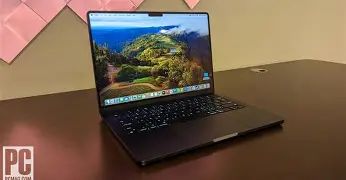
MacBook Pro 14 M3 2023 is positioned for professionals who need sustained CPU/GPU power, a superior display, more ports, and greater configuration flexibility. This model suits video editors, 3D artists, music producers, and software engineers running heavy local workloads.
Detailed product analysis
Design, build and portability
Both machines use aluminum unibody construction and retain the premium fit-and-finish expected from Apple. The baseline MacBook Pro prioritizes small footprint and lighter weight: it slips into smaller bags and feels less fatiguing on long flights. The 14-inch M3 model is thicker and heavier; that extra mass, however, houses more active cooling, a larger battery, and additional I/O. Buyers who travel daily or value the lightest possible laptop will prefer the smaller unit. Those who carry a dedicated bag and want desktop-class performance in a portable chassis will prefer the 14-inch.
Display and creative work
The 14-inch model shines for visual work. Its brighter, higher-contrast display with wide color support and higher refresh capability (when applicable) gives editors and designers a far better reference than the simpler panel in the baseline model. For photographers and video editors who depend on accurate color rendition and local preview fidelity, the 14-inch's display significantly reduces the need to check work on an external monitor.
Performance and thermals
The heart of the comparison is the M3 silicon in the 14-inch variant versus the more modest silicon in the baseline model. In short, the 14-inch M3 design provides higher sustained multi-core performance because of a more capable chip configuration and an improved thermal system. That translates to faster video exports, quicker code builds, and smoother real-time effects playback.
The baseline MacBook Pro remains competent for everyday tasks and light creative work. It excels at web browsing, document editing, light image editing, and development tasks that don't require constant, full-core CPU utilization. However, under prolonged heavy loads (multi-hour video exports, large dataset processing, or compiling very large codebases), the smaller machine will throttle sooner and deliver lower sustained throughput.
Find top-rated Laptops & Computers products at great prices.
Shop Amazon →Ports, expandability and workflows
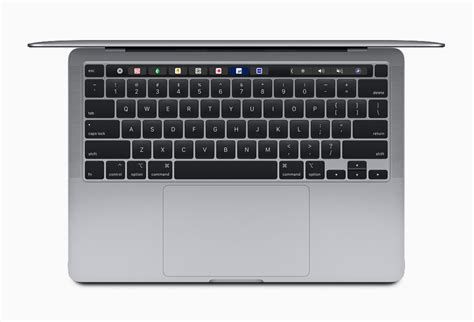
Port selection matters in many professional workflows. The 14-inch model typically includes a wider variety of ports — for example, HDMI, an SD card slot, multiple Thunderbolt ports, and MagSafe charging — which reduces the need for dongles and simplifies on-location shoots. Photographers appreciate the SD slot; video professionals benefit from direct HDMI output to monitors and capture devices. The baseline MacBook Pro often keeps things minimal with fewer ports, which is adequate if the user relies primarily on wireless accessories or a single Thunderbolt dock.
Battery life and daily use
Battery performance depends on configuration and workload. For routine productivity (email, documents, streaming), both machines last a full day for many users. The baseline model's efficiency in light loads and slightly smaller but optimized hardware can result in excellent stamina for typical office tasks. Conversely, the 14-inch's larger battery and higher efficiency under heavier loads often provide superior battery life when running demanding apps — a video editor might get more creative throughput per charge on the 14-inch than on the smaller unit.
Speakers, webcam and other practicalities
The 14-inch model generally offers better speakers and a more robust webcam setup, contributing to a better experience for presentations, remote meetings, and content review. If the user conducts frequent client calls or needs accurate on-device audio, the 14-inch is the stronger choice. The baseline model is still adequate for casual video calls and everyday media consumption.
Pros & Cons
MacBook Pro (baseline)
- Pros: Lightweight and portable, excellent battery life for everyday tasks, simpler price entry point, good single-core performance for many apps.
- Cons: Limited ports, less thermal headroom for sustained heavy loads, display and speaker system are modest compared to higher-end models, fewer high-end configuration options.
MacBook Pro 14 M3 2023
- Pros: Strong sustained performance for pro apps, superior display for creative work, more ports and connectivity, better speakers and webcam, greater memory/storage configuration options for pro workflows.
- Cons: Heavier and less pocketable, higher starting price, some configurations may be overkill for casual users, more expensive to upgrade at purchase time.
Quick comparison table
| Feature | MacBook Pro (baseline) | MacBook Pro 14 M3 2023 |
|---|---|---|
| Target user | Students, writers, general productivity users | Creative professionals, developers with heavy local workloads |
| Portability | More portable, lighter | Less portable, heavier but still travel-friendly |
| Display | High-quality Retina; suitable for everyday use | Higher-brightness, higher-contrast panel; better for color-critical work |
| Performance | Very capable for light-to-moderate tasks | Stronger sustained multi-core and GPU performance |
| Ports | Minimal; mainly Thunderbolt | More diverse: HDMI, SD card, multiple Thunderbolt, MagSafe |
| Battery (real-world) | Excellent for light tasks; very efficient | Excellent overall; better under heavy sustained workloads |
| Audio & webcam | Good for casual use | Better for professional calls and content playback |
| Price | Lower entry cost | Higher starting price; premium for pro features |
Who should buy which — real-world use cases
Buy the baseline MacBook Pro if:
- The primary tasks are word processing, spreadsheets, web browsing, email, and light photo editing.
- Portability and all-day battery life matter more than peak processing speed.
- Budget constraints make the smaller model the only practical option for a needed upgrade.
- The user relies on cloud-based workflows or external desktop machines for heavy lifting.
Buy the MacBook Pro 14 M3 2023 if:
- Work involves multi-hour renders, large project compilation, or real-time video effects where sustained performance reduces turnaround time.
- Color-critical photo/video editing is done on the laptop and an accurate, bright display is required.
- Frequent travel includes professional shoots or client presentations that benefit from built-in HDMI, SD, and strong battery life under load.
- Longevity and configuration headroom (more RAM, higher storage) are priorities to avoid an early replacement.
Buying guide — how to choose and configure
1. Know the typical workloads
Start by listing the apps and tasks used daily. If the workload is office productivity, browsing, or streaming, the baseline model will be efficient and cost-effective. If it includes professional editing, large code bases, virtual machines, or 3D work, prioritize the 14-inch M3 for the improved sustained performance and graphics capabilities.
2. Consider port needs vs. dongles
Think about how often files are imported directly from cameras, or monitors connected without a dock. Photographers and videographers benefit from an SD card slot and HDMI; if those are essential, a model with those ports reduces friction on set. Developers and office users who work at a single desk with a dock may accept a minimal-port MacBook Pro if it lowers cost and weight.
3. Memory and storage — buy right the first time
MacBooks are not user-upgradeable after purchase. For professional applications, prioritize more RAM and faster storage. Memory in particular pays dividends with multitasking, large image files, and virtual machines. For casual users, base memory is generally fine, but power users should consider higher memory tiers.
4. Battery planning for travel
If long offline sessions are common (flights, remote locations), test typical battery drains: video playback, editing a project, or running a local server. Smaller baseline models excel in light tasks, while the 14-inch's larger battery gives better endurance under heavy loads. Pick the model that matches the user's most frequent use-case battery profile.
Shop the latest Laptops & Computers picks on Amazon.
See Deals →5. Thermals and sustained performance
Benchmarks are helpful, but sustained real-world performance matters more for long tasks. The 14-inch's thermal design enables higher average speeds over long jobs. If render time or compile time is part of the user's daily rhythm, prioritize thermal headroom when choosing.
6. Screen size vs. portability trade-off
Consider workstation ergonomics: if most work happens at a desk, the 14-inch screen is an advantage. For those who mostly work from cafes or move between meetings, the lighter baseline model may offer a better balance. Also evaluate external monitor plans — if an external setup is standard, the internal display size may be less critical.
7. Budget and total cost of ownership
Look beyond sticker price. Consider resale value, how long a configuration will stay adequate, and whether the user will save time (and therefore money) with faster exports or builds. For professionals, a higher initial outlay can be justified by recurring time savings. For students and casual users, minimizing upfront cost while getting enough capability is usually wiser.
8. Future-proofing and software needs
Think about the software roadmap. Applications that are increasingly GPU-accelerated or that use multiple cores will benefit from more capable silicon and additional memory. If future projects are likely to increase demands, tilt toward more headroom today.
Practical buying checklist
- List primary apps and classify them as light, moderate, or heavy.
- Decide how often external ports (SD/HDMI) will be used without a dock.
- Choose memory and storage levels based on multitasking and project size.
- Check the weight/size and ensure the laptop fits daily carry habits.
- Factor in warranty and service options if uptime is critical.
Conclusion
The decision between a baseline MacBook Pro and the MacBook Pro 14 M3 2023 comes down to workflow priorities. The baseline model is an excellent, lighter, and more affordable machine for everyday productivity and moderate creative work. The 14-inch M3 is a stronger, more versatile tool for professionals who need sustained performance, a superior display, and broader onboard connectivity.
Buyers who prioritize portability, minimalism, and lower cost will often find the baseline model the smarter choice. Buyers who measure value in time saved on heavy workflows, accuracy of on-device color, and fewer workflow compromises will prefer the 14-inch M3 despite its higher cost and weight. Evaluating typical daily tasks, how often the laptop must handle sustained heavy loads, and the importance of native ports will make the right choice clear.