Blind Test: Sony Bravia Theater Bar 6 vs Samsung Hw Q990F - Which is Actually Better?
Choosing a high-end soundbar can be bewildering: marketing claims, technical specs, and showroom demos rarely reflect how a system will perform in a living room. This blind test examines two premium all-in-one theater-style sound solutions—Sony's Bravia Theater Bar 6 and Samsung's Hw Q990F—through the lens of real-world use. The goal is pragmatic: determine which system delivers better everyday performance for typical buyers concerned with movies, TV dialogue, music, gaming, and ease of setup.
Introduction: why a blind test matters
High-end soundbars aim to replace complex AVR setups with a simplified, immersive experience. Buyers care less about peak wattage and more about clear dialogue, believable surround, room-fit, and compatibility with modern TVs and consoles. A blind test—where the listener does not know which product is playing—reduces bias from brand reputation, appearance, or feature lists and reveals which sound signature and performance characteristics genuinely translate into a better user experience.
This article focuses on practical outcomes: how each system performs in living rooms of varying sizes, with different content types, and with the devices most buyers connect today (4K TVs, game consoles, streaming sticks). It evaluates clarity, immersion, bass behavior, setup and calibration, connectivity, and daily usability.
Product overviews
Sony Bravia Theater Bar 6 — overview
The Sony Bravia Theater Bar 6 positions itself as a premium, TV-branded cinema bar intended to pair especially well with Sony Bravia TVs. It emphasizes room calibration, a refined midrange for dialogue, and a design ethos that favors coherent soundstage integration with contemporary televisions. It is marketed toward buyers who want an elevated home theater feel without the complexity of a receiver and multiple wired speakers.
Samsung Hw Q990F — overview
The Samsung Hw Q990F targets buyers seeking maximum immersion from a single boxed system. It typically includes a powerful subwoofer and wireless rear speakers, and prioritizes height effects and expansive surround imaging. Samsung emphasizes cinematic dynamics and features designed to work closely with Samsung TVs, including synchronization modes and multi-device conveniences.
How the blind test was set up
The blind listening sessions simulate common living-room conditions rather than anechoic chambers. Test conditions included:
- Multiple content types: blockbuster movie scenes with complex atmospherics, dialogue-heavy TV episodes, pop/acoustic music tracks, and fast-action game sequences.
- Two room sizes: a medium living room (≈15–20 m²) and a larger open-plan space (≈25–35 m²).
- Standard connections: HDMI eARC from a 4K TV source, optical backup for older TVs, and wireless streaming from a phone (Bluetooth/UPnP/Chromecast-type functions where applicable).
- Default out-of-box modes and then with each system’s automatic room calibration applied (if available).
- Blind switching and multiple listeners to reduce single-listener bias.
Detailed analysis: sonic performance
Clarity and dialogue
Dialogue clarity separates a good soundbar from a usable one. In the blind test, Sony's Bravia Theater Bar 6 consistently emphasized midrange articulation, making speech intelligible even with complex background effects. This characteristic is beneficial for TV shows, news, and streaming content where understanding conversation is paramount.
Samsung's Hw Q990F also delivered clear dialogue but with a different presentation: slightly warmer overall tuning and more emphasis on low-end body. In scenes with very dense low-frequency effects, there were moments when bass energy masked some detail of quieter dialogue. For viewers who prioritize conversational clarity (e.g., families watching subtitles, dramas with whispered exchanges), Sony's approach will be preferable.
Surround and height effects
Height effects (Dolby Atmos, DTS:X rendering) and the perception of surround were the defining strengths of the Samsung system in the blind test. The Hw Q990F produced a broad and enveloping soundstage—effects moved convincingly above and behind listeners. This created a more cinematic sense of space in blockbuster action scenes and orchestral music.
Looking for the best TVs & Home Theater deals on Amazon?
Browse Now →Sony’s Theater Bar 6 created a coherent front soundstage and a credible sense of width, but its height cues were more conservative. For listeners seeking dramatic overhead rain, helicopter flyovers, or pinpointed Atmos objects, Samsung frequently conveyed greater verticality and motion.
Bass performance and subwoofer behavior
Bass is both visceral and tricky: it must be impactful without overwhelming other frequencies. Samsung’s included subwoofer (and wireless rears with bass reinforcement) produced deeper, punchier lows out of the box, beneficial for action films and EDM. However, in smaller rooms the Hw Q990F occasionally required manual level adjustments or room-sub EQ to avoid boomy or chest-heavy bass that blurred detail.
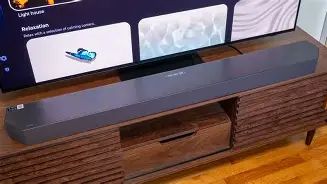
Sony’s system presented tighter, more controlled bass that integrated smoothly with midrange. It lacked the extreme bottom-end slam of Samsung but offered better definition when listening to music and dialogue. Buyers sensitive to overbearing low frequencies or those in modest-sized rooms will appreciate Sony’s more balanced presentation.
Music and stereo imaging
For two-channel music listening, Sony’s tonal balance leaned toward clarity and imaging precision—acoustic instruments and vocals had texture and separation. Samsung performed very well with immersive music mixes (e.g., Dolby Atmos music), where its wide soundstage and immersive processing added excitement. For purists seeking coherent stereo imaging for critical listening, Sony had a slight edge; for listeners who prioritize excitement and immersion, Samsung often won favor.
Gaming and latency
Low input lag and tight transients are essential for gaming. Both systems performed acceptably when connected via HDMI eARC and when TV passthrough introduced minimal latency. Samsung's faster transient response and impactful bass made explosions and engine sounds feel immediate; Sony's crisp midrange helped with positional cues and dialogue. Competitive gamers who rely on pinpoint audio cues should verify manufacturer latency figures and test with their own console, but both systems were satisfactory for casual and immersive gaming.
Setup, calibration, and daily usability
Ease of setup
Both systems are designed for consumer-friendly setup. Sony often integrates tightly with Bravia TVs, enabling simplified audio modes and auto-detection. Its setup wizard and app-driven calibration focus on delivering a balanced result quickly. Samsung emphasizes plug-and-play convenience with wireless rears and subwoofer auto-pairing; its Q-Symphony mode (on compatible TVs) provides synchronized soundbar-TV speaker operation.
Room calibration and tuning
Automatic room calibration improved performance for both systems. Sony’s calibration favored preserving dialogue clarity and midrange detail, whereas Samsung’s calibration often nudged the system toward a more expansive, bass-forward presentation. In both cases, manual tuning options are available for users who prefer to fine-tune levels, bass, or surround intensity.
Connectivity and features
Both bars support modern connections: HDMI eARC, multiple HDMI inputs on the TV side, wireless streaming, and basic voice-assistant integration through connected devices. The Samsung model typically includes more aggressive feature integration with Samsung TVs, while Sony favors cross-brand compatibility and cleaner menu integration. Firmware update cadence and app quality will vary by region and time; buyers should confirm current software support if ongoing features are important.
Discover deals on TVs & Home Theater — updated daily.
See Deals →Pros & cons
Sony Bravia Theater Bar 6 — Pros & Cons
- Pros: Excellent dialogue clarity and midrange definition; controlled, well-integrated bass; coherent front soundstage; strong out-of-box balance; user-friendly calibration focused on clarity.
- Cons: More conservative Atmos/height presentation; less visceral low-end slam than some competitors; optional rear speakers or upgrade paths may be needed for maximal immersion.
Samsung Hw Q990F — Pros & Cons
- Pros: Expansive surround and pronounced height effects; powerful, impactful bass; wireless rear speakers and subwoofer typically included; cinematic presentation for movies and immersive music.
- Cons: Bass can overwhelm in smaller rooms without tuning; dialogue sometimes masked in dense low-frequency scenes; neutral listeners may prefer a more balanced midrange.
Side-by-side comparison
| Attribute | Sony Bravia Theater Bar 6 | Samsung Hw Q990F |
|---|---|---|
| Designed strength | Clarity, midrange, TV-friendly integration | Immersion, expansive surround and height effects |
| Dolby Atmos / DTS:X | Supported; conservative height rendering | Supported; pronounced height and object movement |
| Included rear speakers | Often optional / sold separately or as upgrade | Typically included in the packaged system |
| Subwoofer | Available; tuned for control and integration | Included; deeper, more powerful low end |
| Best for | TV and dialogue-heavy content, music clarity, smaller rooms | Blockbusters, immersive music, larger rooms |
| Ease of setup | Straightforward, tight TV integration | Easy pairing; more automated surround with included components |
| Tuning options | Auto calibration + manual EQ | Auto calibration + manual EQ + TV features (Q-Symphony on compatible Samsung TVs) |
| Room suitability | Small to medium rooms preferred | Medium to large rooms preferred |
Buying guide: how to decide
When choosing between these two systems, buyers should prioritize their primary use cases and room characteristics. The following checklist helps identify which soundbar is the better fit.
1. Primary content type
- If the priority is movies with an emphasis on immersive overhead effects and dynamic bass, favor the Samsung Hw Q990F.
- If the priority is day-to-day TV, drama, news, or music where dialogue and midrange fidelity matter most, favor the Sony Bravia Theater Bar 6.
2. Room size and acoustics
- Smaller rooms: Sony’s more controlled bass and clear midrange reduce perceived muddiness and make for a more balanced experience without aggressive EQ adjustments.
- Larger rooms or open-plan spaces: Samsung’s greater output and included wireless rears/subwoofer will fill space more convincingly.
3. Want a single-box cinematic experience?
- Samsung’s package often includes wireless rears and a subwoofer out of the box, minimizing additional purchases for true surround immersion.
- Sony may require optional components to match the surround depth, but offers a clean, cohesive front-stage presentation as standard.
4. Compatibility and TV ecosystem
- Owners of Sony Bravia TVs may appreciate tight integration and menu-level conveniences with the Sony Theater Bar.
- Samsung TV owners may benefit from Samsung-specific features like synchronized speaker modes (Q-Symphony) and simplified ecosystem interactions. Cross-brand compatibility remains strong on both systems for common features like HDMI eARC.
5. User who values calibration and simplicity
- Both systems offer automatic room calibration; choose Sony for a calibration targeting clarity and balance, or Samsung for calibration that emphasizes wide, cinematic presentation.
6. Budget and upgrade path
- Consider whether the system includes rear speakers and subwoofer. A single purchase that includes all components might be cost-effective compared with buying the soundbar and accessories separately.
- Factor in potential accessory purchases (rear modules, stands, wall-mounts) and the cost of any needed cables or HDMI adapters.
Real-world use cases and recommendations
Different households will weigh features differently. The following archetypes illustrate likely choices:
- The family living room: Prioritizes clear dialogue for varied content and moderate bass that doesn't disturb other rooms. Sony Bravia Theater Bar 6 is recommended for its clarity and controlled output.
- The movie enthusiast: Wants room-filling immersion and pronounced overhead effects for blockbusters. Samsung Hw Q990F is recommended for its wider, more dramatic presentation.
- The apartment dweller: Needs a balanced sound without excessive bass. Sony’s more restrained tuning makes it easier to get satisfying sound at moderate volumes.
- The media room / open-plan house: Needs punch and scale; Samsung’s included subwoofer and rears provide the full-range impact desired in larger spaces.
Final considerations before purchasing
Prospective buyers should audition systems where possible, ideally in a home-like environment or as a blind test to reduce bias. Check for firmware support and read recent owners’ reports for long-term reliability and software updates. Confirm HDMI eARC compatibility with the TV and verify whether any desired features (e.g., TV-synced voice assistants, music streaming protocols) are supported in the buyer’s region.
Additionally, consider placement: both systems will benefit from some space to breathe—avoid burying the subwoofer in cabinets, and place rear modules (if used) at ear level for better surround imaging. Acoustic treatments, rugs, and furniture placement will influence perceived bass and clarity more than small tweaks to onboard EQ.
Conclusion
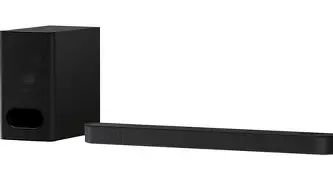
Both the Sony Bravia Theater Bar 6 and the Samsung Hw Q990F deliver compelling experiences, but they approach the problem of home cinema differently. Sony prioritizes clarity, midrange fidelity, and a refined out-of-box balance—qualities that favor everyday TV viewing, dialogue-heavy content, and music. Samsung leans into cinematic immersion, offering stronger height effects, deeper bass, and a wider soundstage—attributes that will thrill movie fans and listeners who want dramatic, room-filling sound.
In short: choose Sony for conversational clarity and balanced musicality in small to medium rooms; choose Samsung for maximum immersion and bass impact in medium to large spaces. The best choice depends on the user's living environment and the content they consume most often. A blind listening session with familiar content remains the most reliable method to determine which system aligns with a buyer’s priorities.