A Professional's Take on the New Eos M200
The landscape of digital photography has undergone a seismic shift over the last decade. As smartphones have become the default camera for the general public, the entry-level dedicated camera market has had to evolve or face obsolescence. The Eos M200 represents a strategic move in this evolution, targeting a specific demographic: the "connected" creator who demands higher image quality than a flagship smartphone can provide but desires the portability and ease of use associated with mobile devices. This article explores the nuances of this mirrorless offering from a professional perspective, analyzing whether its simplified interface masks a powerhouse of imaging potential or if it is strictly a gateway device for enthusiasts.
Introduction to the Eos M200
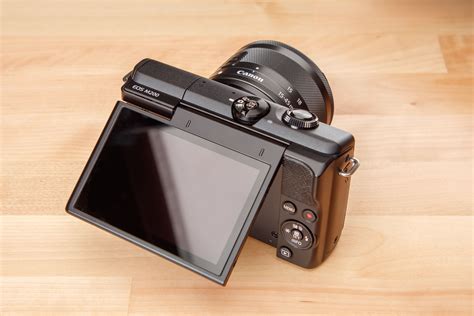
The Eos M200 is the successor to the highly popular M100, and while it retains the same compact, rangefinder-style silhouette, the internal upgrades tell a story of modern requirements. At its core, the camera is built around a 24.1-megapixel APS-C CMOS sensor paired with the powerful DIGIC 8 image processor. This combination is the engine that drives its core improvements, namely enhanced autofocus capabilities and 4K video recording. Unlike larger mirrorless systems or traditional DSLRs, the Eos M200 omits a physical viewfinder and a plethora of manual dials, opting instead for a 180-degree tilt-up touchscreen that serves as the central hub for all operations.
For the professional observing this segment, the M200 is often dismissed as a "social media camera." However, such a label overlooks the technical pedigree that sits beneath its plastic exterior. The camera utilizes the EF-M lens mount, which possesses a short flange back distance, allowing for high-quality optics in a small form factor. Furthermore, with the use of an adapter, it gains access to the vast library of EF and EF-S lenses, making it a surprisingly versatile secondary body for those already invested in a specific ecosystem. The primary goal of the M200 is to bridge the gap between "point-and-shoot" simplicity and "interchangeable lens" creative freedom.
Detailed Product Analysis and Review
Image Quality and Sensor Performance
The 24.1-megapixel sensor is a tried-and-true component in many contemporary APS-C cameras. In the Eos M200, this sensor delivers impressive results that punch well above the camera's price bracket. When shooting in RAW format, the files offer a level of dynamic range and color depth that smartphones simply cannot replicate due to the physical limitations of their much smaller sensors. Professionals will appreciate the "color science" often associated with this manufacturer; skin tones are rendered with a natural warmth, and the transitions between light and shadow are smooth and organic.
High ISO performance is another area where the M200 shines compared to mobile devices. While noise begins to become noticeable at ISO 3200, the grain structure is relatively fine, and a skilled editor can easily clean up files for social media or small prints even at ISO 6400. In well-lit environments, the level of detail captured by the APS-C sensor allows for significant cropping—a luxury that mobile photographers often lack when trying to frame a distant subject without a dedicated telephoto lens.
Autofocus and the Dual Pixel Advantage
One of the most significant upgrades in the M200 is the implementation of Dual Pixel CMOS AF. This phase-detection autofocus system covers a large portion of the frame and is renowned for its speed and accuracy. In the M200, it includes Eye Detection AF, which is a game-changer for portraiture and vlogging. The camera's ability to lock onto a subject’s eye and maintain focus as they move allows users to shoot at wide apertures with confidence, ensuring that the most critical part of the image remains sharp.
From a professional standpoint, the autofocus system feels snappy and reliable. Even in lower light, the camera hunts significantly less than its predecessor. The inclusion of 143 AF points (depending on the lens used) provides enough coverage to track subjects effectively across the frame. While it is not designed as a high-speed sports or wildlife camera, for the everyday scenarios of travel, street photography, and family gatherings, the AF system performs admirably.
Video Capabilities and the 4K Question
Video is where the Eos M200 receives both its highest praise and its most significant criticisms. The addition of 4K video at 24p is a welcome update on paper, but it comes with caveats that professionals must consider. Specifically, 4K recording involves a significant crop factor (approximately 1.6x on top of the APS-C crop). This effectively turns a wide-angle lens like the 15-45mm kit lens into a standard or even slightly zoomed lens, making it difficult to film oneself at arm's length for vlogging.
Furthermore, Dual Pixel AF is unfortunately unavailable during 4K recording, with the camera reverting to contrast-detection AF. Contrast-detection is slower and prone to "hunting" or pulsing, which can be distracting in professional-grade footage. However, when switched to 1080p (Full HD), the full power of Dual Pixel AF returns, and the footage is sampled from the entire width of the sensor. For many creators, the high-quality 1080p output at up to 60fps will be more than sufficient and arguably more reliable than the 4K implementation.
Shop the latest Electronics picks on Amazon.
See Deals →Design and Handling
The M200 is remarkably light, weighing in at approximately 299 grams (including battery and card). Its compact size means it can slide into a jacket pocket when paired with the 22mm f/2 pancake lens. The physical interface is intentionally minimal; there is a mode dial with only three settings (Auto, Manual, and Video) and a single control dial around the shutter button. This simplicity is intentional, forcing the user to interact with the touchscreen for most adjustments.
While professionals may initially find the lack of dedicated exposure compensation or ISO dials frustrating, the touch interface is one of the best in the industry. It is highly responsive and intuitive. The "Creative Assist" mode provides a guided interface for those who understand the effects they want (such as "Background Blur" or "Vivid Colors") but hasn't yet mastered the technical terms like Aperture or Saturation. This makes the camera extremely approachable for beginners while still allowing full manual control for seasoned shooters.
Pros and Cons
Understanding where the Eos M200 fits into a workflow requires weighing its strengths against its inherent limitations as a compact, entry-level device. Below are the key advantages and disadvantages categorized by professional observation.
Pros
- Exceptional Portability: The small footprint makes it an ideal "always-with-you" camera that doesn't attract the attention that a larger DSLR or professional mirrorless body might.
- Reliable Autofocus: Dual Pixel CMOS AF with Eye Detection is incredibly effective for portraits and casual video, providing professional-level focus accuracy in an entry-level body.
- Intuitive Touch Interface: The menu system is logically laid out, and the touchscreen is highly responsive, making it easy to change settings on the fly.
- Excellent Color Science: Standard JPEG output is pleasing right out of the camera, reducing the need for extensive post-processing for quick social media sharing.
- Vertical Video Support: In a nod to the modern content landscape, the camera can record vertical video that rotates automatically on mobile devices, a huge plus for social media stories and reels.
- Ecosystem Versatility: Direct compatibility with EF-M lenses and adapted compatibility with EF/EF-S lenses provides a vast range of optical possibilities.
Cons
- 4K Limitations: The heavy crop and lack of Dual Pixel AF in 4K mode make it less ideal for high-resolution vlogging than competitors.
- Battery Life: The small LP-E12 battery is rated for roughly 315 shots per charge, which can be depleted quickly during heavy video use or long days of travel.
- Lack of an EVF and Hot Shoe: Shooters in bright sunlight will miss an electronic viewfinder (EVF), and the absence of a hot shoe means no external flashes or shotgun microphones can be easily mounted.
- Limited Physical Controls: The reliance on touchscreens can be problematic when wearing gloves or when needing to make rapid, tactile adjustments without looking at the screen.
- Minimal Grip: The sleek, smooth body lacks a substantial handgrip, which can feel insecure when using larger adapted lenses.
Comparison with Market Alternatives
To contextualize the Eos M200, it is helpful to see how it stands against other cameras in the entry-level mirrorless and high-end compact segment. Buyers often care deeply about the trade-off between sensor size, video features, and price.
| Feature | Eos M200 | Competitor A (Compact 1") | Competitor B (APS-C Hybrid) |
|---|---|---|---|
| Sensor Size | APS-C (24.1MP) | 1-Inch (20.1MP) | APS-C (24.2MP) |
| Autofocus | Dual Pixel AF w/ Eye Detection | Hybrid PDAF | Fast Hybrid AF |
| Lenses | Interchangeable (EF-M) | Fixed Zoom | Interchangeable (E-Mount) |
| 4K Video | Yes (Cropped / No DPAF) | Yes (No Crop) | Yes (No Crop) |
| Viewfinder | None | None (or Pop-up) | Electronic Viewfinder |
| Weight | ~299g | ~294g | ~400g+ |
As the table demonstrates, the M200's primary advantage is providing a large APS-C sensor and interchangeable lenses in a body that weighs the same as high-end fixed-lens compacts. While more expensive hybrid cameras offer better 4K performance and built-in viewfinders, they are often significantly bulkier and more complex to operate, which may deter the core audience of the M200.
Professional Buying Guide for the Eos M200
Deciding to purchase the Eos M200 involves looking past its "beginner" marketing and assessing its utility based on real-world use cases. It is not a one-size-fits-all solution, but for the right user, it is an incredibly potent tool.
Who Should Buy the Eos M200?
The M200 is ideally suited for the travel enthusiast who finds a smartphone limiting but a traditional camera kit burdensome. Because it can be charged via USB (with the right accessories) and features seamless Wi-Fi and Bluetooth connectivity, it fits perfectly into a mobile-first lifestyle. Furthermore, vloggers who primarily output in 1080p and want the "blurry background" look afforded by a large sensor will find the M200 to be a cost-effective solution.
For existing owners of professional full-frame systems from the same manufacturer, the M200 serves as a "B-roll" or "lifestyle" camera. Using an adapter, you can mount professional L-series glass onto the M200 for specific shots. While the ergonomics will be unbalanced, the image quality remains stellar, making it a viable emergency backup or a discrete option for street photography where a large DSLR would be too conspicuous.
Key Considerations Before Purchasing
Prospective buyers should first examine their lens requirements. The EF-M lens ecosystem is relatively small compared to others, though it covers the essential focal lengths (ultra-wide, standard zoom, 22mm pancake, and a 32mm prime). If you require specialized optics like tilt-shift or extreme telephoto without using adapters, you might find the native selection limiting.
Looking for the best Electronics deals on Amazon?
See Deals →Secondly, consider your lighting environment. The lack of a hot shoe is perhaps the M200's most polarizing feature from a professional standpoint. You cannot mount a standard speedlight for event photography, nor can you easily attach a high-quality external microphone for video. If you plan on doing professional-grade studio work or run-and-gun filmmaking, the connectivity limitations may become a bottleneck. However, if your work relies on natural light or external audio recorders, these omissions may be irrelevant.
Essential Accessories for the M200
To maximize the potential of the Eos M200, a few strategic additions are recommended by professionals. A second or even third battery is essential for full days of shooting. A small tripod or "gorilla-pod" is also highly beneficial, as it complements the camera’s self-timer and face-tracking features for self-portraits and vlogging. Finally, investing in the 22mm f/2 lens transforms the camera into a truly pocketable professional-grade street photography tool that delivers sharpness and bokeh that rivals much more expensive setups.
Technical Use Cases: From Social Media to Archival Work
In practice, the Eos M200 finds its way into several "pro-sumer" niches. Small business owners often use the M200 for product photography. The large sensor allows for detailed shots of jewelry, electronics, or food, providing the crispness and shallow depth of field needed for professional-looking e-commerce listings. The "Selfie" mode, which includes a simplified skin-smoothing slider, helps business owners create personable "behind-the-scenes" content without needing a full production crew.
Educators and students also benefit from the M200's clean HDMI output. By using a capture card, the M200 can be used as a high-end webcam for online teaching or presentations. The Dual Pixel AF ensures that the presenter stays in focus even if they lean forward to emphasize a point or hold up an object to the camera. This "hidden" feature makes the M200 a dual-purpose tool: a creative camera by day and a high-performance communication tool by night.
Final Thoughts and Conclusion
The Eos M200 is a masterclass in compromise. By stripping away physical controls and high-end video features like uncropped 4K, it achieves a price point and portability that make high-quality imaging accessible to a broader audience. For the professional, it is a reminder that the sensor—not the number of dials—is the heart of the image. While it may not be the primary tool for a wedding ceremony or a fast-paced football match, its ability to produce beautiful, high-resolution RAW files in a package no larger than a smartphone makes it a unique asset.
As an entry-level mirrorless camera, the M200 succeeds by not trying to be everything to everyone. It ignores the professional need for ergonomic complexity in favor of the mobile generation's need for simplicity and connectivity. It provides a clear upgrade path for those outgrowing their phones, offering a tangible leap in image quality, low-light performance, and creative control. In the hands of someone who understands composition and light, the Eos M200 is more than capable of producing gallery-quality results, proving that even at the entry-level, the fundamental principles of photography remain the same.
Ultimately, the Eos M200 stands as a bridge. It connects the world of casual mobile snapping with the world of intentional, light-gathering artistry. Whether it serves as a travel companion, a vlogging tool, or a reliable backup, it delivers a level of performance that challenges the notion of what a "consumer-grade" camera can achieve. For those willing to work within its limitations, the rewards are found in every richly colored, sharp, and detailed frame it captures.